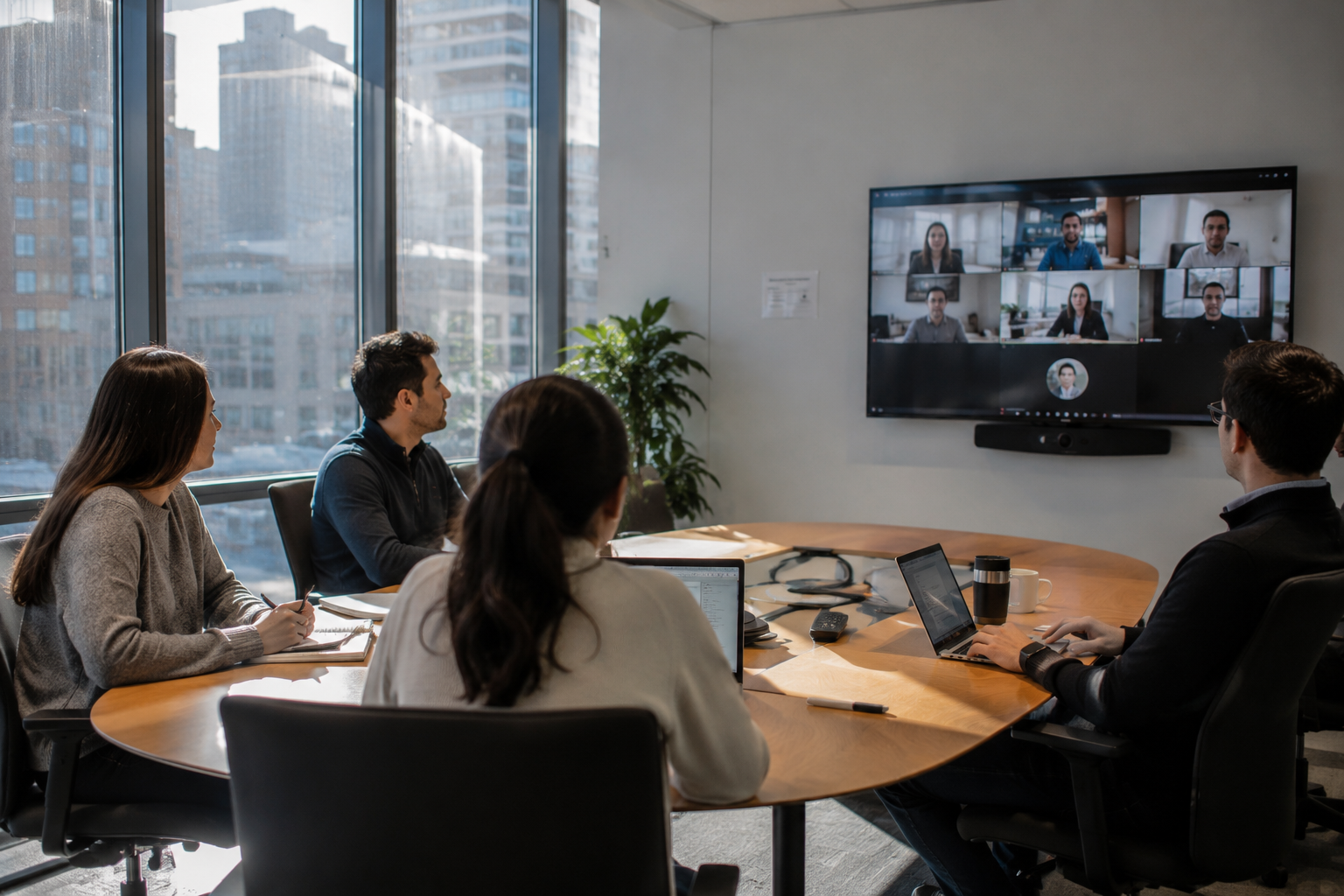
COVID reshaped employment through speed and scale. Practices that previously evolved gradually were introduced simultaneously across organisations, functions and geographies, compressing years of change into a short operating window. Employment shifted from a relatively predictable input into a variable that required active coordination, prioritisation and governance.
Assumptions around location, supervision and productivity were tested directly in live operating conditions rather than through controlled pilots. In response, organisations adjusted how work was structured, how decisions were made and how performance was assessed. Many of these adjustments have since stabilised and now form part of standard workforce models.
The lasting legacy of the pandemic lies less in individual policies and more in the reconfiguration of work itself. Employment increasingly reflects choices around work design, coordination mechanisms and decision authority. These changes continue to shape execution capacity, workforce resilience and the way organisations adapt to ongoing uncertainty.
One of the most visible employment shifts triggered by COVID was the rapid expansion of remote and hybrid work. Research by the National Bureau of Economic Research in the United States shows that remote work expanded from a marginal share before COVID to a sustained level of approximately 25–30% of paid workdays by 2023–2024, illustrating the structural nature of the shift toward hybrid models.
As hybrid arrangements became embedded, their implications extended beyond flexibility. Distributed work reshaped talent access, coordination costs and office economics, increasing the importance of deliberate choices around workflows, decision authority and performance evaluation. Location flexibility now forms part of operating models, requiring organisations to design work explicitly around coordination, accountability and output instead of relying on physical presence as the default organising principle.
The pandemic accelerated a shift in how productivity is understood and managed. As physical visibility declined, organisations moved away from presence-based proxies toward measures tied to output, decision quality and execution reliability. This transition increased reliance on task clarity, coordination routines and accountability structures embedded in day-to-day work.
OECD publication on productivity during and post COVID-19 highlights that productivity outcomes under remote and hybrid arrangements vary widely across organisations. These differences align closely with organisational design choices, including role clarity, management capability and coordination mechanisms, rather than with the work format itself.
Where work is clearly structured and responsibilities are explicit, execution remains stable despite reduced physical oversight.As a result, work design emerged as a primary driver of performance. Clear responsibilities, structured interaction and explicit decision rights increasingly shape execution quality, reinforcing the importance of operating models that support coordination and judgment in distributed work environments.
Hybrid arrangements reshaped labour market behaviour in durable ways. Research by the National Bureau of Economic Research indicates that employees in hybrid roles exhibit lower quit rates, particularly in knowledge-intensive functions. Retention outcomes increasingly reflect role sustainability, workload design and the ability to manage intensity over time, rather than compensation adjustments alone.
At the same time, geographic constraints weakened, expanding effective labour markets and intensifying competition for skills across regions. As external hiring became more contested, internal mobility gained importance as a stabilising mechanism. Organisations with clearer pathways for redeployment and capability transfer were better positioned to retain talent and respond to shifting demand without disrupting execution.
Hybrid work reshaped corporate cost structures, particularly in relation to office utilisation. Evidence indicates that office usage has remained structurally below pre-pandemic levels, even where physical offices continue to play an important role. Space utilisation has become more variable and increasingly aligned with collaboration patterns rather than routine individual work.
As a result, office strategy now interacts more directly with productivity, coordination and cost efficiency. Decisions around lease commitments, space design and utilisation are increasingly shaped by operating rhythms, team interaction needs and task complexity, rather than by headcount alone. In this context, real estate shifts from a fixed overhead to a configurable element of the operating model, requiring closer alignment between workspace design and how work is actually executed.
The pandemic revealed the limitations of rigid job structures. Organisations that could redeploy employees across roles, projects and functions adapted more effectively to shifting priorities and operational disruption. Flexibility at the workforce level proved closely linked to the ability to reallocate effort in response to changing demand rather than to expand or contract headcount.
Report by the International Labour Organization underscores the role of internal mobility and skills adaptability in supporting employment stability during periods of disruption. Workforce resilience increasingly reflects how quickly capability can be transferred and redeployed across activities. In this setting, resilience is shaped less by static role definitions and more by the organisation’s capacity to move skills to where they are needed most.
COVID triggered a fundamental reordering of employment design. Several core assumptions that previously structured workforce models shifted simultaneously, reshaping how organisations plan, coordinate and govern work.
Key shifts at the operating model level included:
- Location as a configurable parameter
Work location shifted from a fixed requirement to a variable input. Hybrid arrangements became part of operating models, requiring explicit choices around coordination, accountability and interaction design.
- Productivity anchored in work architecture
Performance moved away from presence-based proxies toward task clarity, decision quality and execution reliability. How work is structured became more important than where it is performed.
- Retention tied to role sustainability
Retention outcomes aligned more closely with workload design, role clarity and long-term sustainability, rather than with compensation adjustments alone.
- Resilience driven by capability reallocation
Organisational resilience increasingly reflected the ability to redeploy skills across roles, projects and priorities as conditions changed.
These shifts elevated the importance of management systems relative to physical infrastructure. Decisions around workflows, decision rights, performance evaluation and internal mobility began to shape execution outcomes more directly than office presence or headcount planning.
This reordering defines the post-COVID employment equation. Some elements of work proved flexible, while others emerged as decisive. Location proved adjustable within employment models, allowing organisations to rethink how work is coordinated without anchoring execution to physical presence. Coordination, decision design and capability deployment became central. Employment moved from a staffing question toward a system-design problem, with operating choices around hybrid work, internal mobility and performance management shaping execution capacity as directly as capital allocation or technology investment.
The enduring legacy of COVID lies in this shift. Organisations that treat employment as an engineered system gain greater capacity to absorb shocks, reconfigure work and sustain performance under continuous change. The resulting employment model reflects operating reality and policy intent aligned with execution needs.


Proud Sponsor of the 2026 CAPIC National Citizenship and Immigration Conference & CBA Immigration Law Conference
Keep Exploring
25.09.26
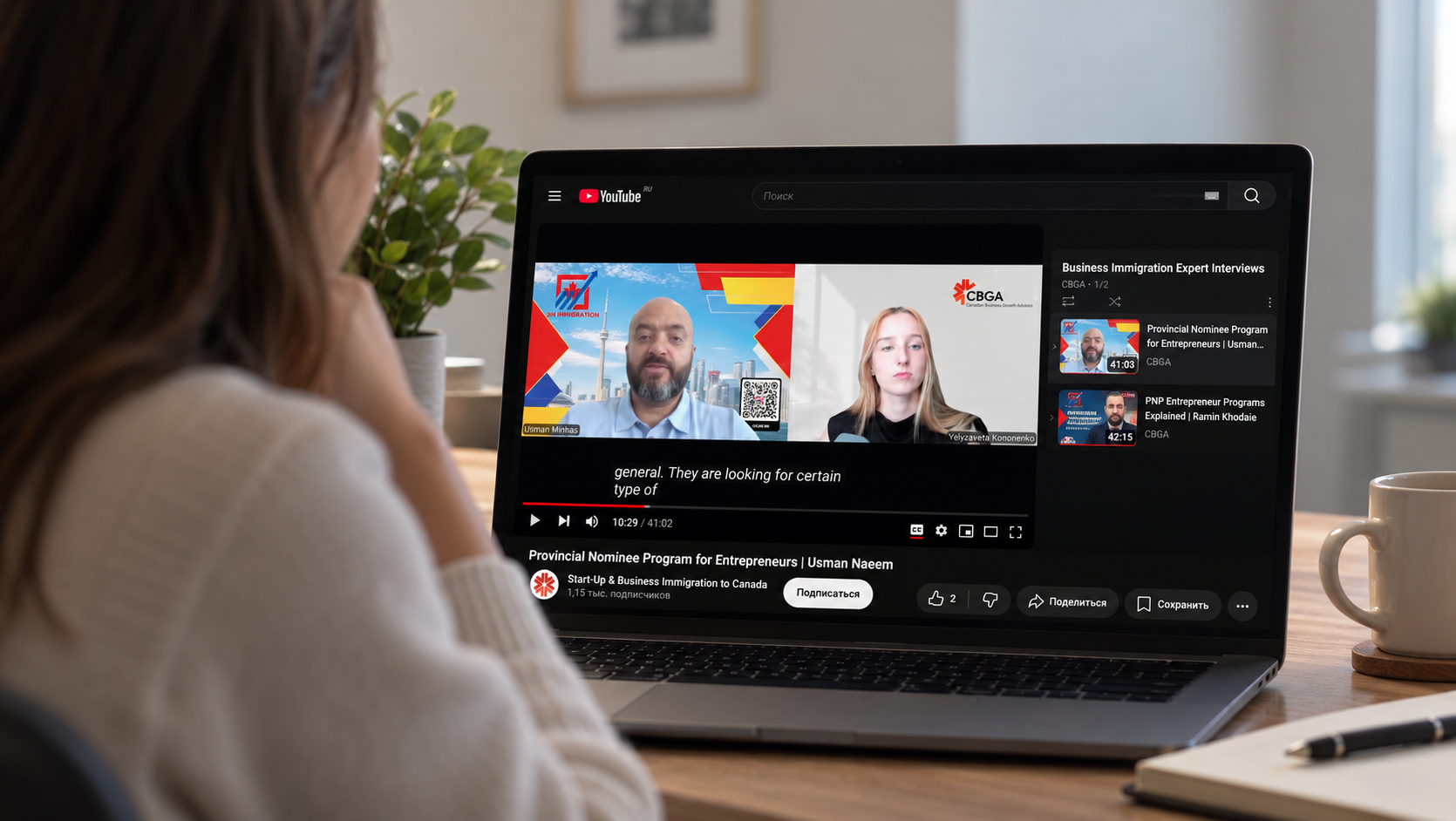
Canadian Business Growth Advisors launches a new Expert Interview Series with immigration professionals supporting entrepreneurs in Canada.
.png)
21.08.26
Canadian Business Growth Advisors has been recognised as a winner of the Management Consulting Awards 2026, presented by Wealth & Finance.

06.08.26
We are proud to share that CBGA has been recognised by Global Brands Magazine in its 2026 Consulting and HR Awards.
Find the
Connect with the experts who can help you unlock your business’s full potential
Expertise
You Need

.svg)




MCA
Management
Consulting Awards
GBA
Global
Brand Awards
