What Happens When an MSB Outgrows Its AML Framework

Key Takeaways
For an MSB, AML compliance becomes effective when regulatory requirements are translated into operational controls that follow the client and the transaction throughout the relationship.
  • AML compliance becomes scalable when regulatory requirements are translated into repeatable operational controls.
  • Customer information, risk assessment, transaction activity and compliance decisions need to remain connected throughout the relationship.
  • As MSBs grow, new products, jurisdictions and customer segments require the AML framework to evolve with the business.
Key Takeaways
For an MSB, AML compliance becomes effective when regulatory requirements are translated into operational controls that follow the client and the transaction throughout the relationship. 
  • AML compliance becomes scalable when regulatory requirements are translated into repeatable operational controls.
  • Customer information, risk assessment, transaction activity and compliance decisions need to remain connected throughout the relationship.
  • As MSBs grow, new products, jurisdictions and customer segments require the AML framework to evolve with the business.

Why KYC Alone Is Not Enough

How an AML/KYC System Is Structured

  • transaction amount and frequency;
  • countries and payment corridors involved;
  • counterparties and beneficiaries;
  • changes in transaction behaviour;
  • funding patterns;
  • unusual transaction structures;
  • activity inconsistent with the expected purpose of the relationship.

Compliance Documents as a Control System

Early-stage MSBs often rely on policies, procedures and manual reviews to manage compliance. As transaction volumes and customer relationships increase, these processes need to become embedded into daily operations through defined controls, decision processes and monitoring mechanisms. 

Policies describe what should happen. Compliance architecture defines how those controls work repeatedly across hundreds or thousands of transactions.
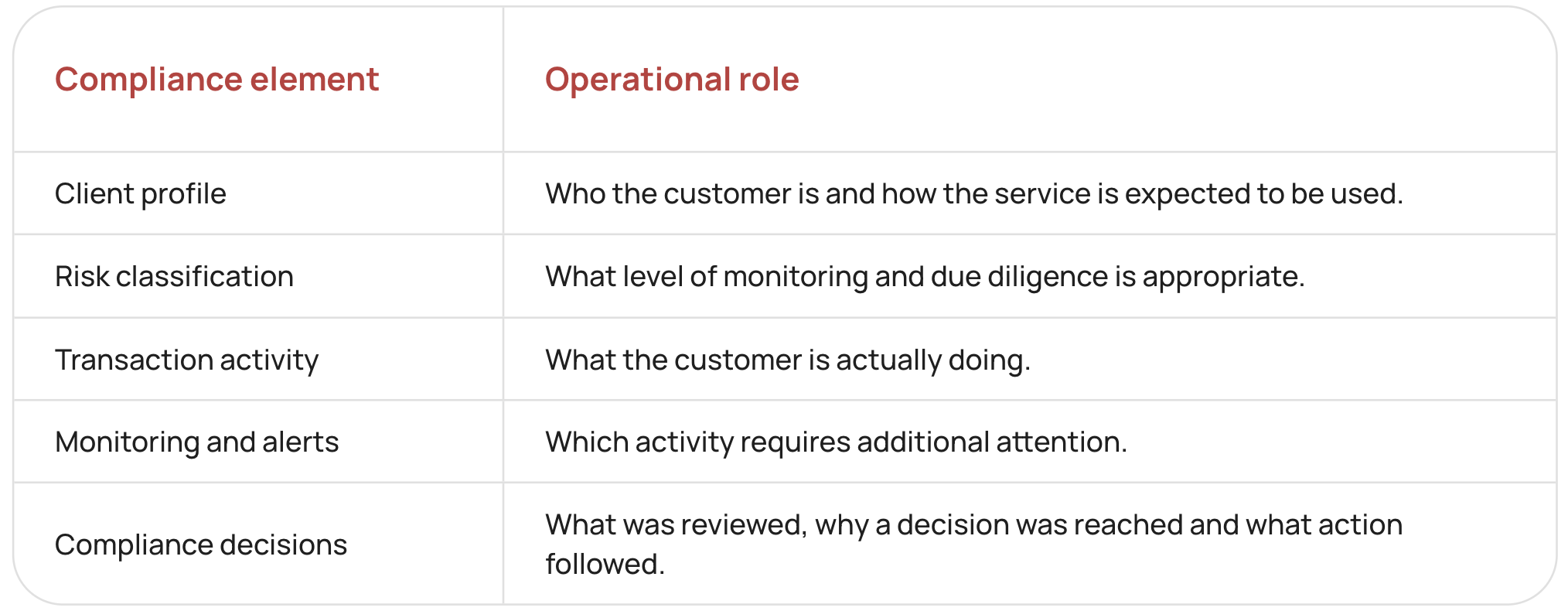
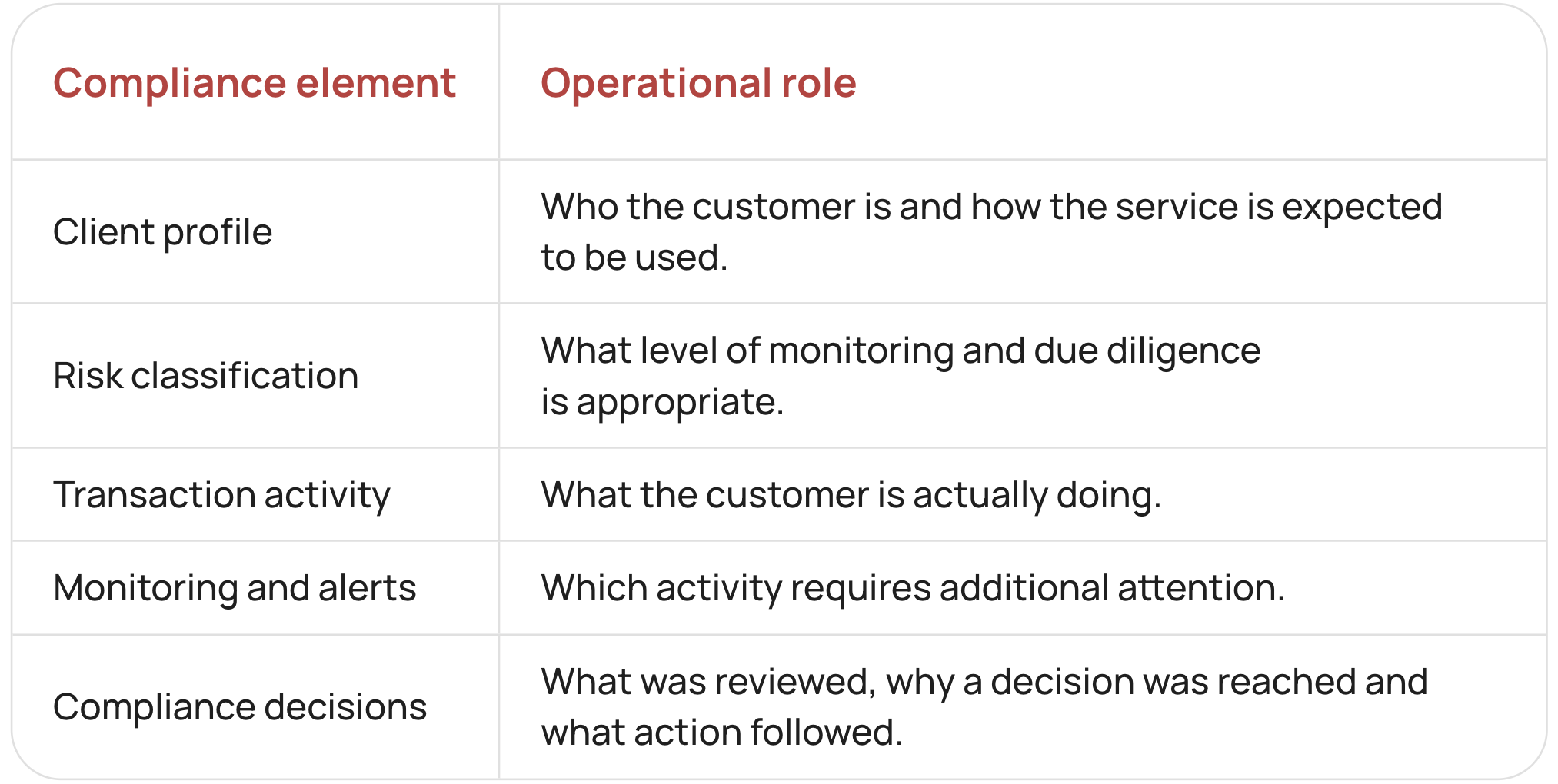
A scalable AML framework keeps customer information, risk assessment, transaction activity and compliance decisions connected throughout the customer relationship. This allows the business to understand both what happened and why a particular decision was made.

Where AML Frameworks Begin to Break

As an MSB expands into new products, jurisdictions, customer segments and payment channels, the AML framework needs to evolve alongside the operating model. Each change can introduce new risks that require updated assessments, monitoring rules and escalation processes.


  • Alert volumes may increase faster than the compliance team can review them.
  • Customer information may become outdated as relationships change and periodic reviews do not keep pace with business activity.
  • Different teams may apply different approaches when escalating unusual activity or documenting compliance decisions.
  • New products, payment corridors or customer segments may be introduced before risk assessments and monitoring rules are updated.

Building AML as a Scalable Operating Capability

.red-bullets li::marker { color: #d94b3d; }